
What causes concrete cracks? You need to know these causes!

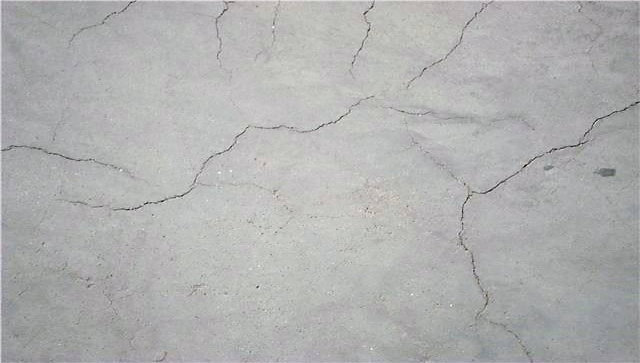
Concrete cracks are a common and troublesome problem in construction. They not only affect the appearance of buildings, but may also lead to functional problems such as leakage, which in turn threatens the safety and durability of the building structure.
1. Material factors:
◆Cement: The heat of hydration of cement is one of the important factors leading to concrete cracking. A large amount of heat is released during the hydration of cement. When the temperature difference between the inside and outside of the concrete is too large, temperature stress will occur. If this stress exceeds the tensile strength of the concrete, cracks will occur. In addition, the type, quality and improper amount of cement may also affect the performance of the concrete. For example, high-alkali cement may lead to increased shrinkage of the concrete, thereby increasing the likelihood of cracks.
◆Aggregates: The particle size, grading and clay content of aggregates have a significant impact on the performance of concrete. If the particle size of the aggregates is too large or the grading is not reasonable, the porosity of the concrete will increase, reducing its density and making it more prone to cracking. Aggregates with a high clay content will affect the bond between the cement and the aggregate, and will also increase the shrinkage of the concrete, leading to cracking.
◆Additives: Improper selection of the type and amount of admixture may also cause concrete to crack. For example, excessive water-reducing agents may increase the slump of the concrete, leading to increased shrinkage during the hardening process and thus cracks. Some air-entraining agents, if used improperly, will introduce too many bubbles into the concrete, reducing its strength and also causing cracks.
2. Construction factors:
◆Pouring: During the pouring process, if the pouring speed is too fast, the pouring height is too high, or the vibration is not dense enough, voids and honeycombs will appear inside the concrete, causing uneven stress on the concrete and leading to cracks. In addition, pouring concrete at too high or too low a temperature will also adversely affect its performance. High temperatures will accelerate the hydration reaction of the cement and increase the shrinkage of the concrete. Low temperatures will prolong the setting time of the concrete, slow the development of strength, and make it more susceptible to frost damage and cracking.
◆Curing: Curing is a key part of the concrete construction process, and improper curing is one of the common causes of concrete cracking. If concrete is not adequately moisturised and cured in the early stages, the water will dissipate too quickly, causing the concrete surface to dry and shrink, and cracks to form. If the curing time is too short, or the curing temperature or humidity is not suitable, the strength development and durability of the concrete will be affected, increasing the risk of cracking.
3. Design factors:
◆Unreasonable structural design: If there are defects in the structural design of a building, such as uneven stress distribution, small cross-sectional dimensions of components, insufficient reinforcement, etc., the concrete will experience excessive stress when bearing loads, which may lead to cracks. In addition, for some large buildings or complex structures, if factors such as concrete shrinkage and creep are not taken into account, cracks may also appear during use.
◆Improperly installed expansion joints: Expansion joints are designed to prevent excessive stress in concrete due to factors such as temperature changes and shrinkage. If the spacing between expansion joints is too large, the width is insufficient or the structure is unreasonable, the deformation stress in the concrete cannot be effectively released, which can lead to cracks.
4. Environmental factors:
◆Temperature changes: Concrete is affected by temperature changes during the hardening process and during use. When the ambient temperature changes significantly, the concrete will experience thermal expansion and contraction. If it is constrained, it will generate temperature stress. When this stress exceeds the tensile strength of the concrete, cracks will appear. For example, in the summer heat, the surface temperature of the concrete is high, while the internal temperature is relatively low. This temperature difference will cause tensile stress on the surface, which is prone to cracking. In cold winter areas, if effective insulation measures are not taken for the concrete, it will also crack due to freezing.
◆Changes in humidity: Changes in humidity can affect the moisture content of concrete, which can lead to shrinkage or expansion. In a dry environment, the moisture in the concrete will gradually dissipate, causing drying shrinkage cracks. In a humid environment, if the concrete’s impermeability is insufficient and water enters the interior of the concrete, it can lead to corrosion of the steel bars and, in turn, cracks in the concrete.