What are the types of water-based defoamers?

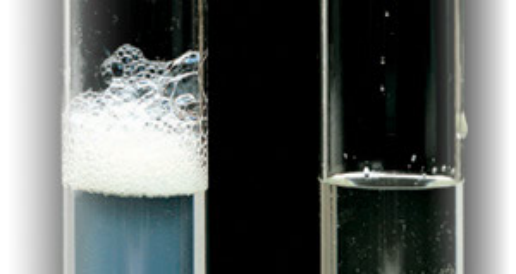
During production or use, foam is often a “stumbling block” that affects product quality and efficiency. Currently, all industrial products and the food industry encounter the problem of foam. However, there is no need to worry too much, as defoamers are designed to eliminate foam. Today, we will share four commonly used types of water-based defoamers.
What are the types of water-based defoamers?
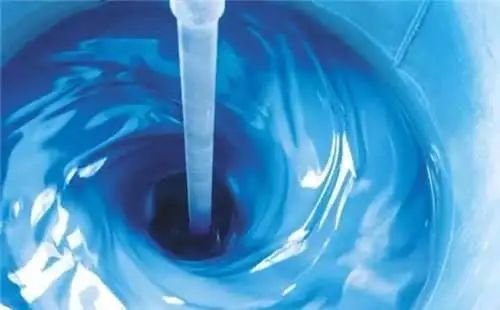
1. Organic silicon (resin) type: Organic silicon is currently widely used due to its fast defoaming, low usage, and favorable price. It is often used in water treatment, sand washing, coal washing plants, shield mud, cleaning, petrochemical, and other industries. Silicon-based water-based defoamers are widely loved for their good defoaming and foam suppression properties.
2. Surfactants: This type of defoamer is actually an emulsifier, which uses the dispersing action of surfactants to keep the foam-forming substances in a stable emulsified state in water, thereby preventing the formation of foam.
3. Alkanes: Alkane defoamers are defoamers made by emulsifying and dispersing alkane wax or its derivatives with an emulsifier. Their uses are similar to those of emulsifying surfactant defoamers.
4. Tri-n-butyl phosphate: Tri-n-butyl phosphate defoamers are plasticizers for nitrocellulose,cellulose acetate, chlorinated rubber, and polyvinyl chloride, as well as an extractant for rare metals. It is soluble in a variety of organic solvents but insoluble in water, making it suitable for a wide range of industries. Due to its low surface tension and poor solubility in water, it can be used as an industrial defoamer to effectively destabilize and quickly eliminate foam.
In addition to the four types mentioned above, there are also polyether GPE, alcohol, and other non-silicone (silicone-free) defoamers for water-based systems.