
The multiple functions of cellulose ether in dry mixed mortar

Cellulose ether, derived from natural cellulose, is a synthetic polymer obtained through chemical modification. The basic material is natural cellulose, which is a natural polymer compound. Due to the unique structure of natural cellulose, it lacks the ability to react with etherification agents. However, under the treatment of swelling agents, the strong hydrogen bonds inside and outside the molecular chain are broken, releasing hydroxyl activity and transforming into reactive alkaline cellulose. After the etherification reaction, the – OH group is converted to the – OR group, thereby forming cellulose ether.
The properties of cellulose ether depend on the type, quantity, and distribution of its substituents. Its classification is mainly based on the type of substituent, degree of etherification, solubility, and related application characteristics. According to the type of substituents on the molecular chain, it can be divided into monoethers and mixed ethers. The commonly used MC in the market is monoethers, while HPMC belongs to mixed ethers. Methyl cellulose ether MC is a product obtained by replacing the hydroxyl group on the glucose unit of natural cellulose with a methoxy group. Hydroxypropyl methyl cellulose ether (HPMC) is a product in which some hydroxyl groups are replaced with methoxy groups, while others are replaced with hydroxypropyl groups. In addition, there are hydroxyethyl methyl cellulose ether (HEMC), which are the main varieties widely used and sold in the market.
From the perspective of solubility, cellulose ethers can be divided into ionic and non-ionic types. Water soluble non-ionic cellulose ethers mainly include two series: alkyl ethers and hydroxyalkyl ethers. Ionic CMC is mainly used in the fields of synthetic detergents, textile printing and dyeing, food, and petroleum extraction. Non ionic MC, HPMC, HEMC, etc. are mainly used in building materials, latex coatings, pharmaceuticals, daily chemical industries, and other fields. In these fields, they are used as thickeners, water retaining agents, stabilizers, dispersants, and film-forming agents, playing important roles.
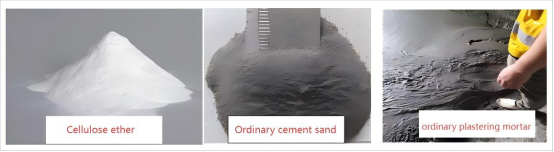
Water retention of cellulose
In the field of building materials, especially in the preparation of dry mixed mortar, cellulose ether plays an indispensable and critical role, especially in the manufacturing process of special mortar (modified mortar), where it plays a crucial role as an indispensable component.
The key role of water-soluble cellulose ether in mortar is mainly reflected in three aspects, namely superior water retention performance, influence on mortar consistency and thixotropy, and interaction with cement.
The water retention effect of cellulose ether is influenced by various factors, including the water absorption of the base layer, the composition of the mortar, the thickness of the mortar layer, the water demand of the mortar, and the setting time of the setting material. The water retention of cellulose ether itself is due to its solubility and dehydration. Although cellulose molecular chains contain a large number of highly hydrated hydroxyl (OH) groups, due to their highly crystalline structure, cellulose is not directly soluble in water. By introducing substituents, especially larger ones, the hydrogen bonds and van der Waals forces of the molecular chain are disrupted, leading to an increase in intermolecular distance. This structural change causes cellulose ether to expand in water rather than dissolve, forming a high viscosity solution. At proper temperature, the hydration of this polymer weakens, and the water between chains is expelled, forming a three-dimensional network structure of gel. The factors that affect the water retention of mortar include the viscosity, addition amount, particle fineness, and operating temperature of cellulose ether.
The viscosity of cellulose ether has a significant impact on its water retention performance, and the viscosity of its polymer solution is related to the molecular weight (degree of polymerization), molecular structure, chain length, and morphology of the polymer. The viscosity is positively correlated with the molecular weight. The viscosity of cellulose ether solution is related to concentration and directly related to its applications in different fields. Therefore, each cellulose ether has multiple different viscosity specifications, and viscosity regulation is achieved through the degradation of alkali cellulose, i.e. the breakage of cellulose molecular chains.
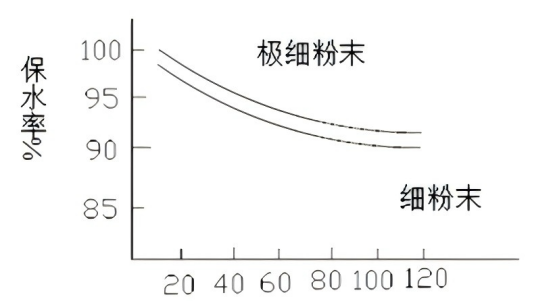
From the observation in the figure, it can be seen that increasing the amount of cellulose ether added to the mortar results in better water retention performance and higher viscosity, thereby achieving superior water retention performance.
Thickening and thixotropy of cellulose ether
The second function of cellulose ether, namely thickening, is influenced by various conditions, including the degree of polymerization of cellulose ether, solution concentration, shear rate, and temperature. The unique gel property of alkyl cellulose and its modified derivatives is an important manifestation of its thickening effect. The gel characteristics are closely related to the degree of substitution, solution concentration and additives, especially for hydroxyalkyl modified derivatives. The gel characteristics are also related to the degree of hydroxyalkyl modification.
When preparing mortar, the amount of cellulose ether added is directly proportional to the concentration of the solution, and the thickening effect of cellulose ether is closely related to its molecular weight. High molecular weight cellulose ethers have higher thickening efficiency, and polymers with different molecular weights exhibit different viscosities at the same concentration. To achieve the target viscosity, a large amount of low molecular weight cellulose ether needs to be added. The viscosity of cellulose ether has little dependence on shear rate, and high viscosity can be achieved by adding a smaller amount to achieve the target viscosity, which determines the thickening effect.
Choosing cellulose ether with different degrees of modification and particle size can adjust the consistency of mortar. Obtaining cellulose ethers with different properties by changing the relative substitution values of substituents (DS and MS). The relationship between viscosity and modification is shown in the figure. The figure illustrates how the addition of cellulose ether affects the water consumption of mortar, thereby changing the water cement ratio of the cement slurry, i.e. the thickening effect. Cellulose ether must dissolve quickly in cold water to provide the appropriate viscosity. If flocculent or colloidal blocks still form at a certain shear rate, it indicates poor product quality.
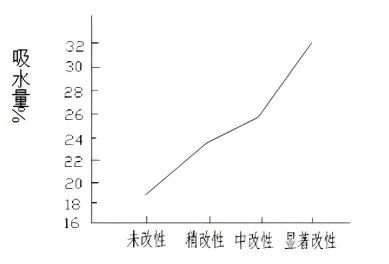
There is a good linear relationship between the viscosity of cement slurry and the dosage of cellulose ether. Cellulose ether can significantly increase the viscosity of mortar, and the greater the dosage, the more significant the effect. High viscosity cellulose ether aqueous solutions exhibit high thixotropy, which is a significant characteristic of cellulose ethers. The aqueous solution of MC type polymers typically exhibits pseudoplasticity, but exhibits Newtonian flow properties at low shear rates. Pseudoplasticity increases with the increase of molecular weight or concentration of cellulose ether, regardless of the type and degree of substitution of substituents. Therefore, different types of cellulose ethers exhibit the same rheological properties under the same conditions.
It should be noted that the higher the viscosity of cellulose ether, the better its water retention. However, as the viscosity increases, the relative molecular weight decreases, which has a negative impact on the mortar concentration and construction performance. Therefore, the thickening effect is not entirely proportional to viscosity, and some modified cellulose ethers with medium to low viscosity perform better in improving the structural strength of wet mortar.