
GVR Report coverSynthetic Gypsum Market Size, Share & Trends Report Synthetic Gypsum Market (2025 – 2030)

Synthetic Gypsum Market Summary
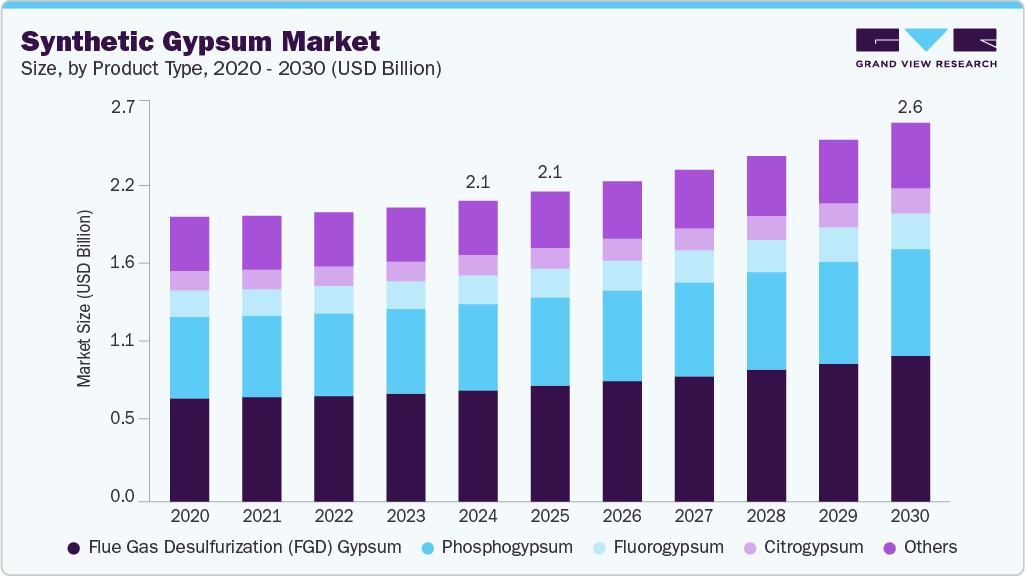
The global synthetic gypsum market size was estimated at USD 2.06 billion in 2024, and is projected to reach USD 2.59 billion by 2030, growing at a CAGR of 4.1% from 2025 to 2030, driven by the exponential growth in construction activities across the globe, owing to improving financial conditions and rapid industrialization. In addition, the governments of both developing and developed countries are emphasizing infrastructure development, which is further driving product demand.
Key Market Trends & Insights
- The North America synthetic gypsum market dominated the market with the largest revenue share of 28.0% in 2024.
- The U.S. synthetic gypsum market held the largest share in the region in 2024.
- By product type, the flue gas desulfurization (FGD) gypsum segment held the largest revenue share of 37.0% in 2024.
- By application, the drywall segment held the largest revenue share in 2024.
Market Size & Forecast
- 2024 Market Size: USD 2.06 Billion
- 2030 Projected Market Size: USD 2.59 Billion
- CAGR (2025-2030): 4.1%
- North America: Largest market in 2024
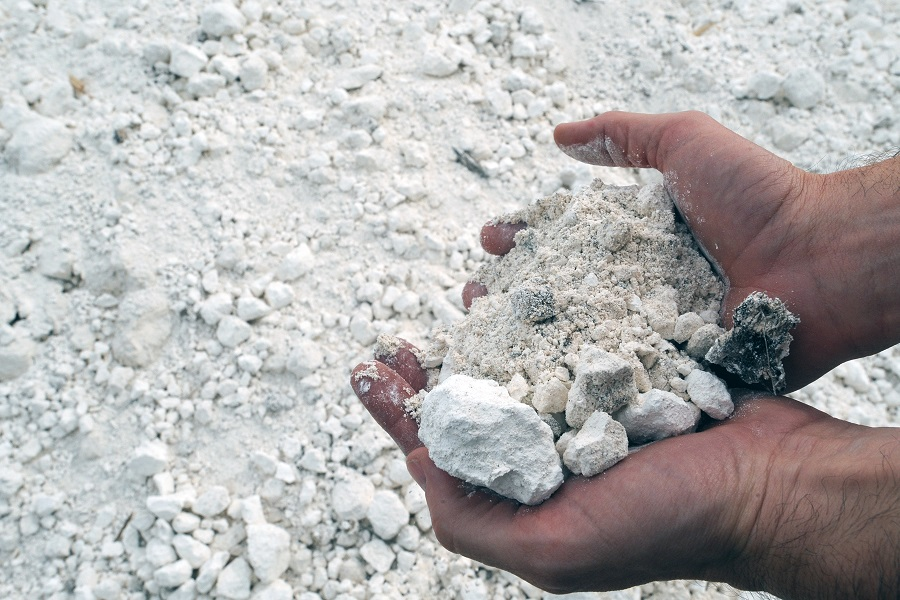
Expansion of urban infrastructure is further encouraging the use of eco-friendly and advanced construction materials. All such factors are promoting the growth of synthetic gypsum industry. Synthetic gypsum, also known as artificial gypsum, is derived from various industrial by-products. It is composed of calcium sulfate dihydrate and possesses the same characteristics as natural gypsum. Synthetic gypsum is used in the construction sector for various applications, including plasters, cement, and drywall. The limited resources and depleting reserves of natural gypsum across countries are propelling the production of synthetic gypsum to meet growing demand. In addition, synthetic gypsum is an energy-efficient product used to insulate buildings and reduce the overall energy consumption of structures. Synthetic gypsum also offers better insulation properties by absorbing noise and sound. The growing emphasis on the construction of green and energy-efficient buildings is boosting the growth of the synthetic gypsum industry.
Technological advancements in synthetic gypsum production have improved its quality and efficiency, making it more viable for various applications. Synthetic gypsum’s ability to enhance agricultural productivity is boosting its adoption in sustainable farming practices. Rich in sulfur, synthetic gypsum is an ideal source of plant nutrition and is also used to improve soil structure and aggregation and reduce dispersion in the soil. Innovations, such as enhanced purification and processing methods, are expanding synthetic gypsum’s use in construction and agriculture. The rising demand for soil amendments, due to the need for improved soil structure and nutrient availability, is further driving market growth.
Market Concentration & Characteristics
The market growth stage is medium, and the pace of growth is accelerating. Ongoing efforts by key industry participants have resulted in fragmented market scenarios by driving innovation, strategic partnerships, and sustainability initiatives. Major players are investing in advanced technologies to improve product quality, efficiency, and cost-effectiveness, while also exploring new applications in construction, agriculture, and other sectors. In addition, industry leaders are expanding their regional presence by strengthening distribution networks and addressing growing environmental concerns. These efforts enhance competitiveness support the overall growth of the synthetic gypsum market, ensuring long-term sustainability and market expansion.
The global synthetic gypsum industry is characterized by a moderate degree of innovation in terms of technology, production process, and use of raw materials. Manufacturers are exploring advanced technologies and alternative raw materials to enhance the production process, reducing energy consumption and minimizing waste. Innovations such as improved purification techniques and the use of industrial by-products are making synthetic gypsum an eco-friendlier alternative. Such advancements contribute in achieving environmental goals and open up new growth opportunities for industry players by catering to the increasing demand for sustainable construction and agricultural solutions.