
Does the viscosity of cellulose ether have these effects on machine-applied mortar?

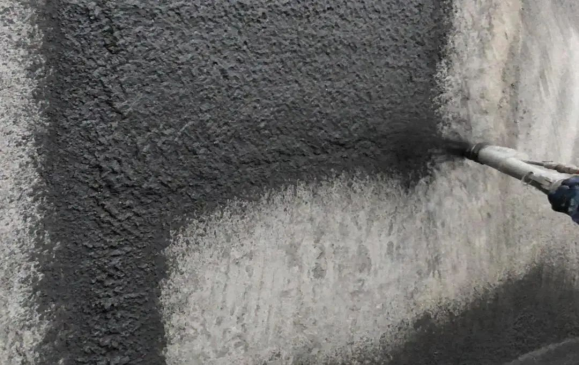
The superiority and stability of the performance of plastering mortar applied mechanically is a key factor in development, and cellulose ether, as a core additive for plastering mortar, plays an irreplaceable role. Cellulose ether has the characteristics of high water retention and good wrapping, and is particularly suitable for the mechanised application of plastering mortar.
1. Effect on water retention
The water retention of plastering mortar tends to increase when the viscosity of the cellulose ether is between 50,000 and 100,000, and to decrease when it is between 100,000 and 200,000. The water retention of special cellulose ether for machine spraying is over 93%.
The higher the water retention rate of the mortar, the less likely it is to bleed. When spraying experiments were carried out with a mortar spraying machine, it was found that when the water retention rate of the cellulose ether was lower than 92%, the mortar was prone to bleeding after being left for a period of time. Moreover, it was particularly prone to clogging at the beginning of spraying. Therefore, when formulating a plastering mortar suitable for mechanised construction, we should choose a cellulose ether with a high water retention rate.
2. Effect on 2h consistency loss
A 2h consistency loss test was carried out on machine-sprayed plastering mortars with cellulose ethers having viscosities of 50,000, 100,000 and 200,000. It can be seen that as the viscosity of the cellulose ether increases, the 2h consistency loss value of the mortar gradually decreases, which also shows that the higher the viscosity of the cellulose ether, the better the consistency stability of the mortar and the better the anti-delamination performance of the mortar.
However, in actual spraying, it was found that during the later leveling process, the viscosity of the cellulose ether was too high, and the adhesion between the mortar and the trowel became stronger, which was not conducive to construction. Therefore, as long as the mortar does not settle or delaminate, the lower the viscosity of the cellulose ether, the better.
3. Effect on open time
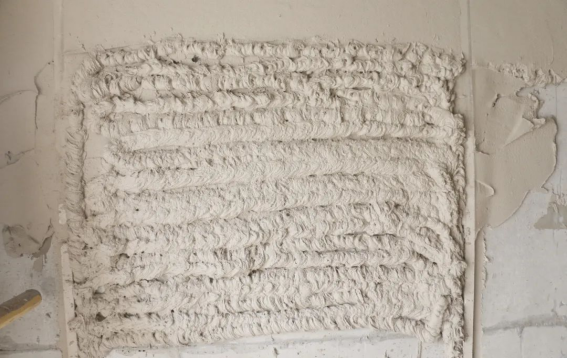
After the plastering mortar is sprayed onto the wall, the water absorption of the wall substrate and the evaporation of the moisture on the surface of the mortar will cause the mortar to develop a certain degree of strength within a relatively short period of time, which will affect the subsequent leveling work. Therefore, it is necessary to analyse the setting time of the mortar.
The viscosity of cellulose ether is in the range of 100,000 to 200,000, and the setting time does not change much. It also shows a certain correlation with the water retention rate, that is to say, the higher the water retention rate, the longer the setting time of the mortar.
4. Effect on fluidity
The wear of spraying equipment is closely related to the fluidity of the plastering mortar. For the same water-to-material ratio, the higher the viscosity of the cellulose ether, the lower the fluidity value of the mortar. This means that the higher the viscosity of the cellulose ether, the greater the resistance of the mortar and the greater the wear on the equipment. Therefore, for mechanised construction of plastering mortar, a lower viscosity of the cellulose ether is better.
5. Effect on anti-sag properties
After plastering mortar is sprayed onto the wall, if the mortar has poor anti-sag properties, it will sag and even slide off, seriously affecting the evenness of the mortar and causing great trouble in later construction. Therefore, a good mortar needs to have excellent thixotropy and anti-sag properties.
Experiments have found that cellulose ethers with viscosities of 50,000 and 100,000 will cause tiles to slip after the fibre-reinforced board is erected vertically, while cellulose ethers with viscosities of 200,000 are less likely to cause this.
6. Effect on mortar strength
Cellulose ethers with viscosities of 50,000, 100,000 and 200,000 were used to prepare samples of plastering mortar for mechanised construction. It was found that as the viscosity of the cellulose ether increased, the strength value of the plastering mortar decreased. This is because the cellulose ether forms a highly viscous solution in water, which introduces a large number of stable air bubbles during the mixing of the mortar. After the cement hardens, these bubbles form a large number of voids, thereby reducing the strength value of the mortar. Therefore, for mechanised plastering mortars, it is important to use the right cellulose ether to achieve the required strength value.
The coordination of man, machine and material is a key factor in mechanised construction, and the quality of the mortar is of paramount importance. Only the use of suitable cellulose ethers can ensure that the mortar’s various properties can meet the needs of mechanised spraying.