
Concrete abnormal setting control

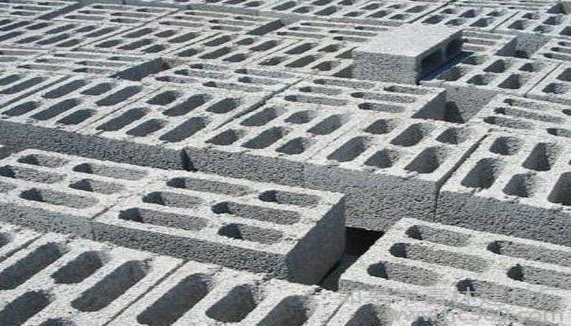
Today, commercial concrete is widely used. The workability, durability, and strength of concrete have been greatly improved under the control of mixing plants. However, due to the distance of transportation, cement type, admixture, and other reasons, the abnormal setting time of commercial concrete has become a growing concern.
1 Concrete setting time
After adding water to commercial concrete, the cement hydrates and over time the slurry gradually loses its fluidity and plasticity. This process is called concrete setting. Initial setting time is the time from when the cement is mixed with water until the slurry starts to lose its plasticity. Final setting time is the time from when the cement is mixed with water until the slurry completely loses its plasticity and starts to develop strength.
2 Types of abnormal concrete setting
The abnormal setting time of concrete usually manifests itself in three ways: slow setting, rapid setting, and pseudo-setting. Rapid setting and pseudo-setting can lead to difficulties in concreting. Slow setting can lead to prolonged stripping of the formwork, low early strength, and in severe cases, failure to meet the design requirements for 28-day strength, resulting in a quality incident.
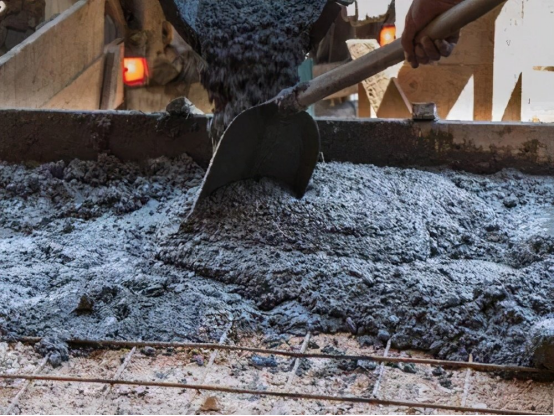
3 Analysis of the causes and hazards of abnormal concrete setting
3.1 Rapid setting and pseudo-setting
Rapid setting is characterized by the fact that after the cement and water come into contact, the slurry quickly sets to form a very coarse mixture with poor workability, and sets quickly with a large amount of heat release. Pseudo-setting is characterized by the fact that after the cement and water come into contact, it sets within a few minutes without a significant temperature rise. If it is mixed again at this time, plasticity can still be restored, and it can be used for pouring and setting in the usual form.
There are several main reasons for this:
First, the cement kiln calcination process is not sufficient or even, and the clinker contains reduced clinker.
Second, the cement contains a lot of alkalis, and alkali carbonates can react with Ca(OH)2 in the cement to precipitate CaCO3. The formation of this cementitious carbonate accelerant can cause the cement to set quickly.
Third, improper use of early-strength cement (cement marked with an R) can also cause the concrete to set quickly.
Fourth, when using admixtures such as calcium aluminate, calcium sulfoaluminate, polycarboxylic hydroxyalkylamides, and organic compounds containing hydroxyl carboxylic acids, or composite admixtures containing these ingredients, rapid setting may occur due to incompatibility between the admixture and the cement.
Fifth, rapid setting may also occur when the ambient temperature during concrete mixing is higher than 35°C and the temperature of the concrete at the outlet of the mixer is higher than 35°C.
3.2 Slow-setting
Construction engineering requires that the final setting time of concrete is generally about 10h to 14h (except for concrete with special requirements). Slow setting is when the final setting time of concrete seriously exceeds the designed or expected setting time. There are also several main reasons for this:
First, the setting time of cement is too long. The setting of concrete is mainly caused by the setting of cement, so the setting time of cement determines the length of the setting time of concrete.
Second, an excessive amount of retarder or retardant water reducer is the main reason for the long setting time of concrete, or even for concrete not setting for several days.
Third, when the quality or amount of admixture (fly ash, mineral powder, etc.) is not appropriate, abnormal setting is likely to occur. An excessive amount may cause delayed setting.
Fourth, incompatibility between water reducer and cement or admixture.
Fifth, inappropriate construction techniques or measures.
Sixth, in addition to the above factors. Low ambient temperature, low activity of the mixing material (or mineral admixture) and high dosage, as well as coarse cement, can also lead to an extended setting time of the cement.
When concrete sets slowly, the following hazards can arise: First, delays in the construction schedule, which can lead to subsequent processes not being able to proceed normally. Second, poor concrete quality due to the final setting time being too late. Third, significant economic losses.
4 Preventing abnormal setting
4.1 Investigate the raw materials produced by the raw material plant
When selecting raw materials for the mixing plant, a survey of the raw materials produced by the raw material plant should be conducted in advance. The inspection should not be a mere formality, and the decision should not be based solely on price. Take cement plants as an example. Strict checks should be carried out in terms of production scale, production capacity, process level, personnel level, measurement management, and other aspects. In particular, it should be ensured that cement plants do not use anhydrite, semi-hydrated gypsum, phosphogypsum, and other prepared materials for cement. Choose cement with the right setting time. A cement with a long setting time is an important cause of ultra-slow setting of concrete. Generally speaking, rotary kiln cement should be preferred for producing ready-mixed concrete, and vertical kiln cement should be chosen carefully; Portland cement and ordinary Portland cement should be chosen.
4.2 Increase communication with raw material manufacturers
During the concrete production process, communication with the raw material manufacturers should be increased. When the key indicators of the raw materials provided by the raw material manufacturers, such as the processing technology and component mixing ratio, change, the situation should be grasped in a timely manner and measures should be taken. When the season changes and the manufacturer changes, the adaptability of cement, admixtures and mixing materials should be tested. 4.3 Correctly select admixtures
In particular, avoid overdosing retarders or retarder-type water reducers. The choice of retarder or retarder-type water reducer should be determined on a case-by-case basis. Because some retarders or retarder-type water reducers have a very strong retarding effect, overdosing can cause delayed setting or even no setting for a long time, so the dosage must be accurate. Because the dosage is very small, it is best to use a water-based agent or dissolve the solid material in water before adding it.
4.4 Control of water used for mixing concrete
When the water used to mix concrete contains substances such as oil, acid, sugar or when the finished curing cover contains these types of substances, it may also lead to abnormal setting. For this reason, the regulations stipulate that the mixing water used in the mixing plant should be water that has passed the required tests.
4.5 Strict measurement management of the mixing plant
A metrologist must be appointed, and the local (district or municipal) metrology bureau must be commissioned to carry out calibration checks on production and testing equipment such as concrete mixers. The calibration check confirmation report must be compiled and archived by the mixing plant. The metrologist must carry out random checks on production and testing equipment, and carry out repairs and maintenance. Unlicensed personnel are not allowed to use the equipment, and the use and operation of the equipment must strictly follow procedures and standards. This will prevent problems with the concrete caused by measurement problems with the equipment.
4.6 Strict management of the mixing plant’s testing chamber
The laboratory is an important part of quality control at the mixing plant. The setting time of concrete can be determined by the penetration resistance of 3.5 MPa and 28 MPa. Therefore, the laboratory of the mixing plant is the most direct and effective way to control the setting time of the finished concrete. Whenever there is a seasonal change, a change in the project, or a change in the raw materials, the laboratory should be the first to report the change in setting time and adjust the mix ratio.