
Ceramic tile adhesive powder and cellulose ether: how do they affect the viscosity and setting time of the mortar?


Ceramic tile adhesive is a mixture of cement as the main cementitious material, supplemented by graded aggregates, water retention agents, early strength agents, latex powders and other organic or inorganic admixtures. It is usually used by simply mixing with water. Compared with ordinary cement mortar, it can greatly improve the bond strength between the facing material and the substrate, has good anti-slip properties and has the advantages of excellent water resistance, heat resistance and resistance to freeze-thaw cycles. It is mainly used for sticking decorative materials such as building interior and exterior wall tiles and floor tiles, and is widely used for interior and exterior walls, floors, bathrooms, kitchens and other building facing decoration places.
In addition to its handling properties and anti-slip ability, the performance of tile adhesive should also focus on its mechanical strength and open time. Cellulose ether not only affects the rheological properties of tile adhesive, such as the smoothness of handling and knife adhesion, but also has a strong influence on the mechanical properties of tile adhesive and the open time of tile adhesive. When powdered glue and cellulose ether coexist in the wet mortar, some data show that powdered glue has a stronger kinetic energy to adhere to the hydration products of cement, while cellulose ether is more likely to exist in the interstitial liquid, which has a greater effect on the viscosity and setting time of the mortar. The surface tension of cellulose ether is greater than that of powdered glue, and more cellulose ether enriched at the mortar interface will be beneficial to the formation of hydrogen bonds between the base surface and cellulose ether.
The powdered glue changes the consistency and smoothness of the system when mixed wet. Adding latex powder improves cohesion, and after drying it provides the adhesive force for a smooth, dense surface layer. It improves the interface effect between the sand, gravel and air holes. When the amount added is guaranteed, it forms a film at the interface, making the tile adhesive flexible, reducing the elastic modulus, and to a large extent absorbing thermal deformation stress. It is also water-resistant when exposed to water later, and buffers temperature and material deformation inconsistencies. The flexibility and rigidity of the powder can generally be determined by its glass transition temperature. If the glass transition temperature is below 0°C, the powder is flexible. Which powder to use in the mortar generally depends on the product’s performance characteristics. A tile adhesive needs to use a powder with good adhesion. In wet mortar, the evaporation of water in the mortar causes cellulose ether to accumulate on the surface. Within 5 minutes, a film forms on the surface of the mortar, which slows down the subsequent evaporation. As more water migrates from the thicker parts of the mortar to the thinner parts, the film that formed initially dissolves partially, and the migration of water causes more cellulose ether to accumulate on the surface of the mortar. Cellulose provides the fresh mortar with good water retention and workability, and is particularly important for wetting the surface area. To ensure that the hydration reaction proceeds smoothly, excessive water absorption by the substrate and evaporation of surface water should be prevented. Due to its air-entraining properties, the bulk density of the tile adhesive is reduced, which saves material and reduces the modulus of elasticity of the hardened mortar. The film formed by the cellulose ether on the surface of the mortar has a significant effect on the properties of the mortar. If the film is too thin, it will dissolve again and cannot limit water evaporation, reducing strength. If the film formed is too thick, the cellulose ether will have a high concentration in the mortar interstitial liquid and a high viscosity, and it will not be easy to break the surface film when the tiles are pasted. It can be seen that the film-forming properties of cellulose ethers have a significant effect on the open time. The type of cellulose ether (HPMC, HEMC, MC, etc.) and the degree of etherification (degree of substitution) directly affect the film-forming properties of cellulose ethers, in terms of the hardness and toughness of the film.
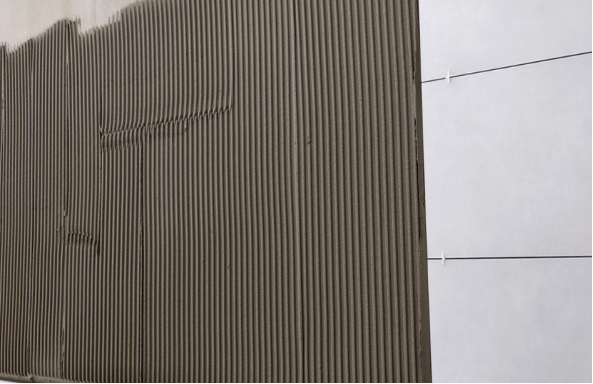
In addition to imparting the various beneficial properties of mortar mentioned above, cellulose ethers also slow down the hydration kinetics of cement. This retarding effect is mainly due to the adsorption of cellulose ether molecules on various mineral phases in the cement system that are undergoing hydration, but generally it is generally agreed that cellulose ether molecules are mainly adsorbed on hydration products such as C-S-H and calcium hydroxide, and rarely on the original mineral phases of clinker. In addition, due to the increase in the viscosity of the pore solution, cellulose ether reduces the mobility of ions (Ca2+, SO42-, …) in the pore solution, which further slows down the hydration process.