
The role of polycarboxylic acid water reducer in grout

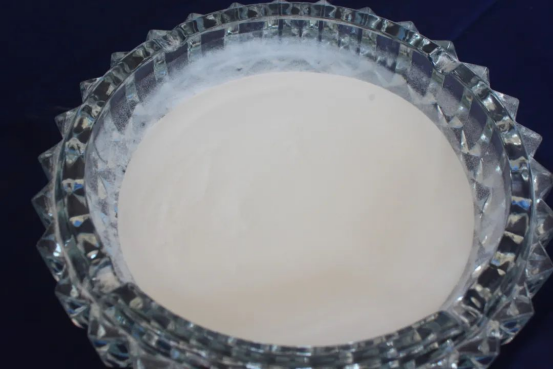
Water-reducing agents are an important component of grout. They are admixtures that can significantly reduce the water content of grout while maintaining its fluidity. The amount of water-reducing agent can change the fluidity of grout, improve workability (while maintaining the same amount of cement and water-cement ratio); due to the reduction of the water-cement ratio, it improves a series of properties of grout such as strength and durability (while maintaining the same fluidity); or both.
Polycarboxylic acid water reducing agents have the following effects on grout:
1. Dispersing effect:
After the cement is mixed with water, the cement slurry forms a flocculent structure due to the molecular attraction of the cement particles, trapping 10% to 30% of the mixing water inside the cement particles, preventing it from participating in free flow and lubrication, and thus affecting the fluidity of the mixture. When a water reducer is added, the water reducer molecules can be adsorbed on the surface of the cement particles in a directional manner, causing the surface of the cement particles to carry the same type of charge (usually a negative charge), which creates an electrostatic repulsive effect. This causes the cement particles to disperse from each other, destroying the floc structure and releasing some of the water that was trapped inside, which then participates in the flow, thereby effectively increasing the fluidity of the mixture.
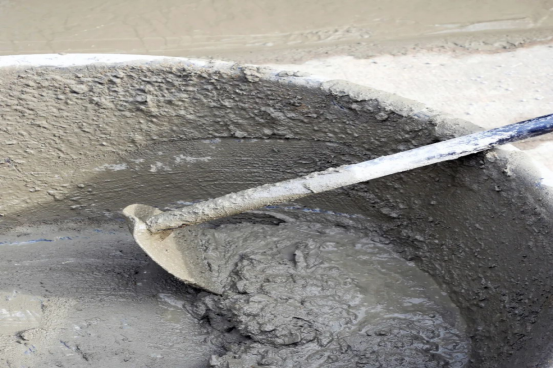
2. Lubricating effect:
The hydrophilic group in the superplasticiser is very polar, so the adsorption film of the superplasticiser on the surface of the cement particles forms a stable solvated water film with water molecules. This water film has a very good lubricating effect, which can effectively reduce the sliding resistance between the cement particles, thereby further improving the fluidity.
3. Sustained-release effect of grafted copolymer branches:
In the preparation process of polycarboxylic acid water reducing agent, some branches are grafted onto the molecule of the water reducing agent. The branch not only provides steric hindrance effect, but also can be slowly cut off in the high alkaline environment of cement hydration, thus releasing polycarboxylic acid with dispersing effect, which can improve the dispersing effect of cement particles and control the loss of slump.
4. Steric hindrance effect:
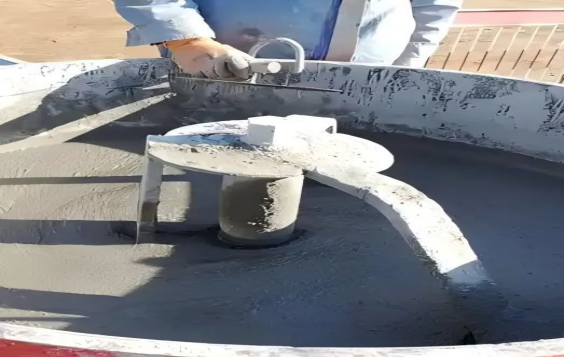
The hydrophilic polyether side chain in the structure of the water reducer extends in the aqueous solution, thereby forming a hydrophilic three-dimensional adsorption layer of a certain thickness on the surface of the adsorbed cement particles. When cement particles approach, the adsorption layer begins to overlap, that is, steric hindrance occurs between the cement particles. The more overlap, the greater the steric hindrance, and the greater the hindrance to the cohesive effect between the cement particles, which keeps the slump good.