
What affects the water retention stability of hydroxypropyl methyl cellulose?


In general, the viscosity stability of hydroxypropyl methyl cellulose depends on the degree of substitution and the evenness of the degree of substitution. It swells in cold water to form a clear or slightly turbid colloidal solution. The aqueous solution has surface activity and forms a film after drying, which is highly transparent and stable.
It also has the property of a thermal gel: its aqueous solution forms a gel when heated and dissolves again when cooled. The gelation temperature of different specifications of the product is different. Solubility varies with viscosity, and the lower the viscosity, the greater the solubility.
Hydroxypropyl methyl cellulose ethers on the market basically have the characteristics of thickening, salt rejection, pH stability, water retention, dimensional stability, excellent film-forming properties, as well as a wide range of enzyme resistance, dispersibility and adhesion.
So what are the factors that really affect the water retention of hydroxypropyl methyl cellulose ethers?
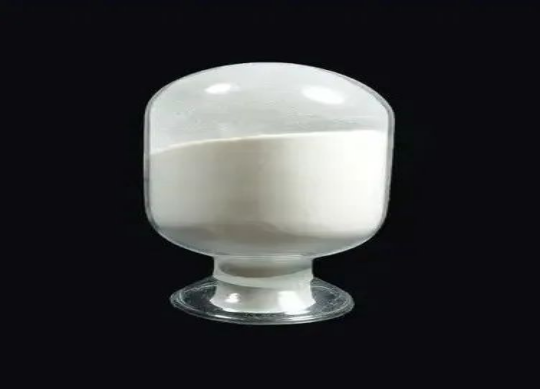
1. Uniformity of degree of substitution
Hydroxypropyl methyl cellulose ether that has reacted uniformly has a uniform distribution of methoxy and hydroxypropoxy groups, and has a high water retention rate.
2. Hot gel temperature
The higher the hot gel temperature, the less affected by the ambient temperature, and the higher the water retention stability. Conversely, the lower the water retention stability.
3. Viscosity of cellulose ether
Generally, when the viscosity of hydroxypropyl methyl cellulose ether is high, the ability of its long chain to carry water is higher than that of the same series of low viscosity, so its water retention stability is better than that of the same series of low viscosity. Of course, the water retention of cellulose ethers of different brands and models is different, so I recommends that the actual experimental results prevail.
4. The amount of cellulose ether added
Normally, the higher the amount of hydroxypropyl methyl cellulose ether added, the higher the water retention rate and the better the water retention effect. Within the range of 0.25-0.6% added, the water retention rate increases rapidly with the increase of the amount added; when the amount added is further increased, the increasing trend of the water retention rate slows down.