
A common additive for improving the early strength of cement mortar——Calcium Formate

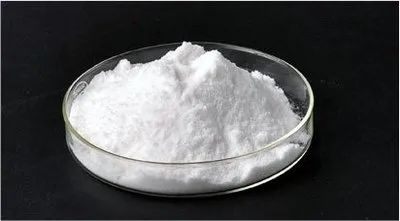
Calcium formate is a common early strength agent for improving the early strength of cement. It is widely used in dry powder mortar and has the performance of accelerating hydration and improving the early strength of mortar. Especially at low temperatures, calcium formate can significantly improve the early strength of mortar.
1. How to distinguish the quality of calcium formate
Due to the fact that calcium formate is made from a single raw material and the production process is simple, there are many calcium formate manufacturers on the market, with varying product quality and price differences.
(1) Produced from pure acid, 85% pure formic acid reacts with heavy calcium carbonate (after pretreatment, high calcium content, low impurities) at a certain temperature for a certain period of time to form a complex, making calcium formate more stable. It has a high composition and content, and the binding of calcium ions is more stable.
(2) Production of waste acid: The waste acid from other products (such as waste acid from leather washing) has a low acid content of between 20% and 30%, which means it has low utilisation. It also contains harmful substances (such as chloride ions and magnesium ions) from leather products or other products, which are low in cost but have a significant impact on the growth of animal bodies.
(3) By-product formic acid: a by-product formed after the main product (e.g. methyl propane). In the production of the main product, raw materials formic acid and calcium hydroxide are required. Among them, formic acid reacts with calcium hydroxide to form calcium formate. The by-product of the main product has a low content and negligible cost, but the main product (e.g. methyl propane) will remain in the by-product calcium formate, which has a significant impact on the growth of animal bodies.
2. The role of calcium formate in mortar
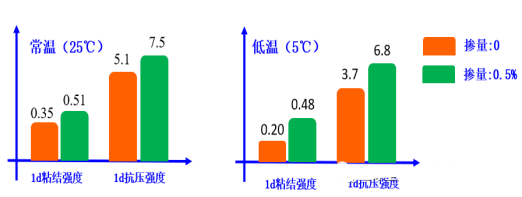
(1) Under normal temperature conditions, the 1-day bond strength of plastering mortar mixed with calcium formate is 45.7% higher than that without calcium formate, and the 1-day compressive strength is 49.0% higher. This shows that calcium formate can significantly promote the hydration of cement and improve the early strength of mortar under normal temperature conditions.
(2)At low temperatures, the 1-day bond strength of the plaster mortar mixed with calcium formate is 140% higher than that of the unmixed mortar, and the 1-day compressive strength is 83.8% higher. This shows that calcium formate has a particularly significant effect on the early strength of the mortar at low temperatures.
3. Identification
(1) Loss on ignition
The loss on ignition of calcium formate is between 20% and 30%, while the loss on ignition of sodium sulfate, sodium chloride and calcium chloride is less than 5%. The purity of calcium formate can be roughly determined by the loss on ignition, but it also needs to be comprehensively identified using ion titration.
Loss on ignition test method: Weigh 3-5g of the sample and place it in a muffle furnace. Burn at 650°C for about 2 hours, wait until it cools, then remove it, weigh it and calculate the result.
(2) Ion titration
Titration principle
Calcium formate is a salt that can completely dissolve in water and ionise, so the authenticity of calcium formate can be determined using chemical titration.
When calcium formate dissolves in water, it can only ionise calcium formate ions and calcium ions, and does not contain other impurities.
If other ions such as (SO42-, Cl-) are titrated, it indicates that the purity of calcium formate is not high.
According to the titration principle, we know that real calcium formate does not contain SO42- or Cl-. Therefore, we use the most basic ionic reactions to carry out mutual titrations, i.e., titrate Ca2+ with Na2CO3, SO42- with BaCl2, and Cl- with AgNO3, respectively, and then judge the authenticity of calcium formate based on the phenomenon.
Remember not to add Na2CO3, BaCl2 and AgNO3 at the same time
(3) Look at its colour
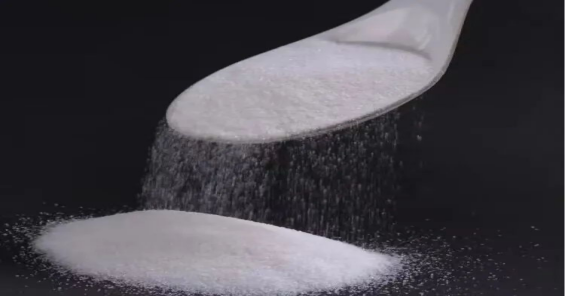
Genuine calcium formate is white crystals with uniform particles, no impurities, shining brightly in the sunlight, and with relatively strong fluidity.
(4) Smell its smell
The by-product grade calcium formate has a strong pungent smell, while the genuine calcium formate has no pungent smell.